


Dr. Lalit Rajpal
Confidence Beauty Redefined
Transforming lives through artistry, expertise, and care with global standards of excellence.

Hair Transplant Scars: FUE vs FUT, Healing & Recovery
Key Highlights
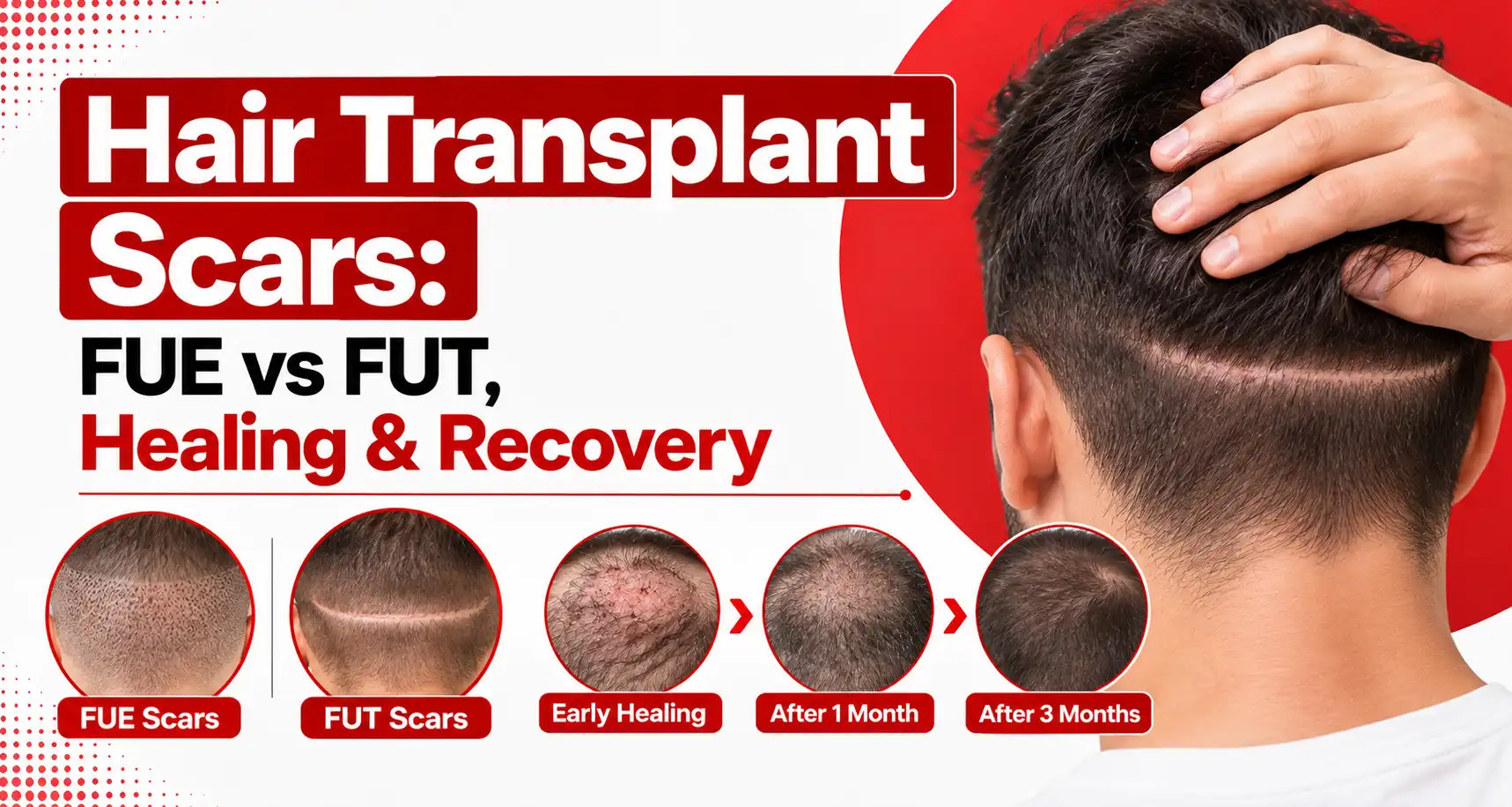
- FUE and FUT hair transplant scarring is different, where the scarring in FUE leaves dots on the scalp surface, whereas FUT leaves scars on the surface of the scalp in a linear way.
- Hair transplant recovery depends upon the type of the treatment, which helps in decreasing redness, swelling and scabbing during the recovery period.
- The way in which the scar of a hair transplant recovers affects the visibility of the scar due to proper care of the scar by an individual.
- Patient must know about pain, safety, success rate, outcome and cost of hair transplant treatment beforehand.
- Get a personalized treatment protocol for hair transplant in Mumbai with the guidance of Dr. Lalit Rajpal as per your needs.
Table of Contents
- What Causes Hair Transplant Scars?
- FUE Hair Transplant Scars
- FUT Hair Transplant Scars
- How Long Does Hair Transplant Recovery Take?
- Healing Period for Hair Transplant Scars
- FUE vs FUT: Which Causes Less Noticeable Scarring?
- Can You Wear a Cap After Hair Transplant?
- Is Hair Transplant Painful?
- Is Hair Transplant Safe?
- Hair Transplant Success Rate and Expected Results
- Hair Transplant Cost in Mumbai
- Wrapping It Up
Hair Transplant Scars: FUE vs FUT, Healing & Recovery
Hair transplantation has become one of the most discussed options for hair loss and thinning. Yet, one thing that becomes a concern for many patients who choose hair transplantation is the risk of hair transplant scar visibility.
It is important to know that there are some differences in the way scars heal depending on the chosen technique, the patient’s healing abilities and aftercare. Scars from FUE and FUT procedures are completely different.
Knowing the entire process and its duration will help you have a better idea of aftercare. It is always better to consult Dr. Lalit Rajpal, a renowned plastic surgeon in Mumbai, to get individualized treatment. Read this piece to learn more about hair transplant scars.
What Causes Hair Transplant Scars?
Scarring in hair transplants is a common result of the procedure, which involves harvesting and implanting hair follicles in areas of hair loss. The hair transplant scars after surgery depend on the approach used.
Follicular unit extraction produces small extraction sites. Follicular unit transplantation involves removing a patch of scalp skin tissue which is then sewn together. In the first stage of healing you may experience redness and markings.
FUE Hair Transplant Scars
FUE involves removing individual follicular units from the donor area using small punches. The resulting scars are usually tiny and randomly distributed because you don’t need to cut out a strip of scalp tissue.
The FUE hair transplant scars may appear as small dots after FUE hair transplants. These scars can be very subtle if the healing process takes place and hair regrows in that area. The scars can look different depending on the skin type and methods used.
FUT Hair Transplant Scars
In FUT, the surgeon removes a strip of skin that contains hair follicles. This process creates a scar at the extraction site in the form of a straight line.
FUT hair transplant scars are easy to cover with surrounding hair, as long as you keep it at a proper length. Scar appearance varies from person to person, depending on several factors.
How Long Does Hair Transplant Recovery Take?
Hair transplant recovery time depends on the type of surgery the patient underwent. Normal activities can be resumed after a few days but redness, swelling, and scabbing will take some more time. Scalp healing and hair growth take 6 to twelve months.
Healing Period For Hair Transplant Scars
Hair transplant scar healing starts right after the surgery. In the early stages of healing, you may see redness and crusting at both the donor and recipient sites. These usually disappear as healing progresses.
Hair transplant scar healing time varies depending on the type of surgery and the individual body’s ability to heal. Extraction area scars usually fade as healing progresses but the incision in the strip method becomes a mature linear scar.
FUE vs FUT: Which Causes Less Noticeable Scarring?
FUE creates smaller scars because it extracts individual hair follicles, so scarring is limited to small dots on the donor site. FUT creates a linear scar because it removes a part of the scalp to extract hair follicles, so the scar can be noticeable when you wear short hair. Nevertheless, scar formation depends on many factors, including your body’s healing ability.
Can You Wear a Cap After Hair Transplant?
Many patients wonder whether they can wear a cap after hair transplant, since they may need it to protect their scalp or hide temporary redness. Yes, you can wear a loose and clean cap during your healing period.
Is Hair Transplant Painful?
Many also have doubt like is hair transplant painful. The answer is no. The procedures are done under general anesthesia so you will not feel any pain during the procedure. You may experience soreness, tightness, tenderness, or sensitivity after the anesthesia wears off. Your surgeon can give you instructions on managing pain after surgery.
Is Hair Transplant Safe?
If you think Is hair transplant safe? Yes, it is. The hair transplant procedure is completely safe. Consult your surgeon to understand the full process before starting the process. Knowing everything about the process in advance will help you with better aftercare.
Hair Transplant Success Rate and Expected Results
The hair transplant success rate might vary based on many aspects such as the quality of grafts used and post operation care. Remember that the hair follicles used in the procedure need some time to adjust and develop according to their natural cycle.
Some follicles may drop out temporarily before fresh development begins. Surgery results do not appear immediately. They build gradually, sometimes over a few months. Patients should have realistic expectations.
Hair Transplant Cost in Mumbai
Hair transplant cost in Mumbai depends on various factors which include the number of grafts required and the amenities available at the clinic. Other expenses may include consultation and afer care. Consulting with the doctor can help determine the number of grafts needed and recipient sites as well as overall costs.
Wrapping It Up
Hair transplantation can help overcome hair loss and increase hair density and overall appearance. It will be useful to know the difference between FUE and FUT, possible scarring, the healing process, the risks involved, safety issues and the results that can be expected to have realistic expectations about the procedure. As each patient has unique hair loss and requirements, a professional evaluation will be necessary during treatment planning
If you want the best hair transplant in Mumbai, contact Dr Lalit Rajpal and discuss your treatment options. With an individual approach, he could evaluate your hair loss problem, the donor area and your aesthetic requirements and offer you the right solutions. Book your appointment with Dr. Lalit Rajpal now!
About Author

Dr. Lalit Rajpal
Dr. Lalit Rajpal, MBBS, MS, MCh (Plastic Surgery), is a board-certified plastic, aesthetic, and hair transplant surgeon based in Mumbai with over 12 years of experience. Known for his precise and patient-centered approach, he combines advanced surgical techniques with an artistic touch to deliver natural and precise results. Dr. Lalit is a member of leading national and international plastic surgery associations and is committed to providing personalized, ethical, and high-quality care to every patient.
Latest Post
- Understanding The Difference Between Gynecomastia And Chest Fat
- Rhinoplasty Cost In India: A Complete Breakdown
- Hair Transplant Cost in India: Find Out What You’ll Really Pay!
- Hair Transplant Side Effects
- How to Reduce Breast Size Naturally and With Surgery
- Is Hair Transplant Safe? Complete Safety Guide
- Right Age for Hair Transplant: Minimum Requirement, Risks & Benefits

Dr. Lalit Rajpal is a leading Plastic, Cosmetic, and Hair Transplant Surgeon based in Mumbai. With over 10+ years of experience, he has successfully performed 300+ cosmetic surgeries and 420+ reconstructive surgeries.



Treatments
©2026 All Rights Reserved Dr. Lalit Rajpal Aesthetic Clinic Managed by Vbind