


Dr. Lalit Rajpal
Confidence Beauty Redefined
Transforming lives through artistry, expertise, and care with global standards of excellence.

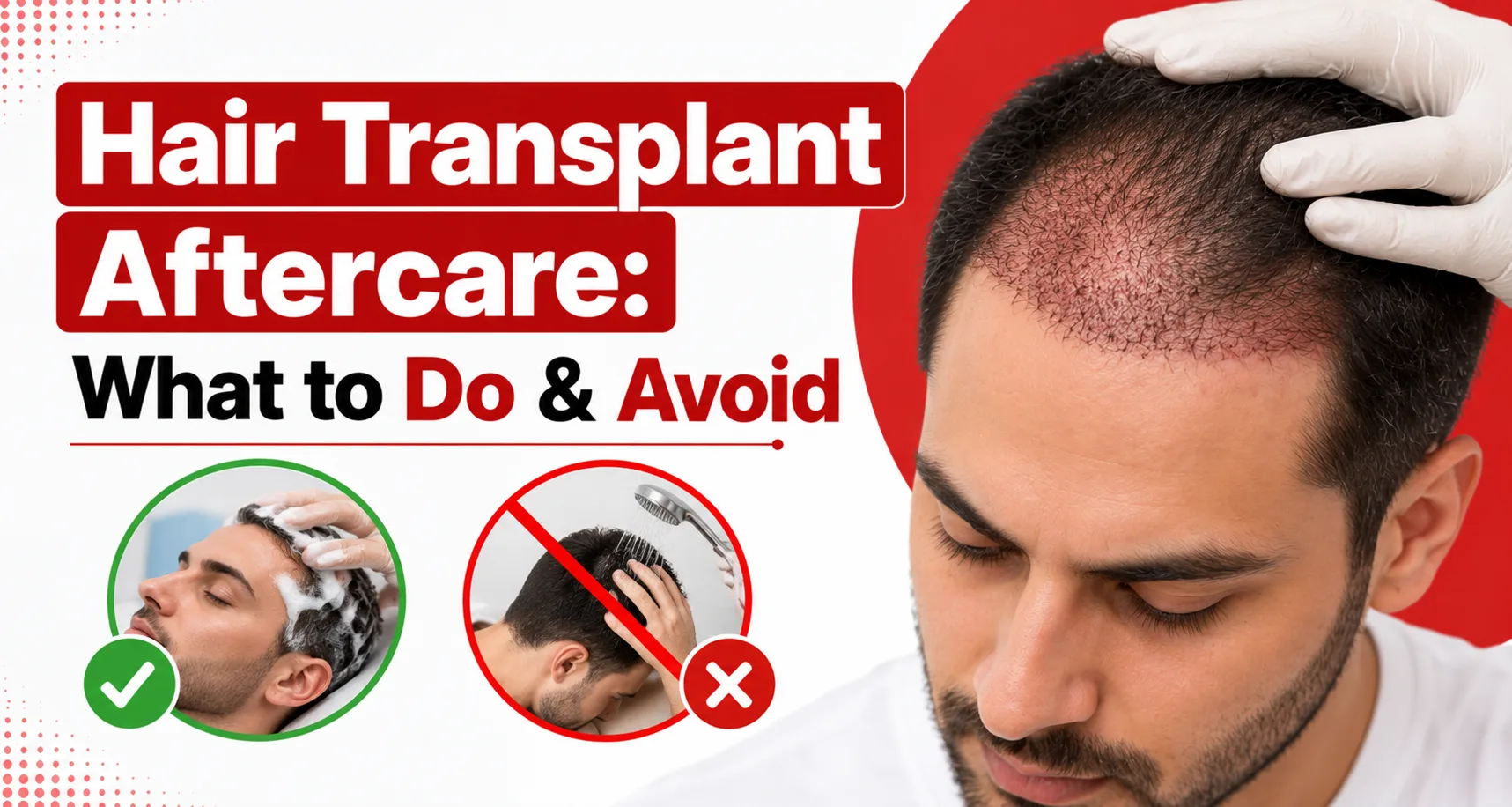
Hair Transplant Aftercare: What to Do & Avoid
Key Highlights
- After your hair transplant, do not touch or do anything else that can cause friction and pressure when you try to protect the graft.
- Stay clean during your showers and use proper positioning when sleeping.
- Hard physical activity and chemicals may affect scalp wound healing. You should not damage them until your surgeon allows you to do so.
- Watch your progress closely and report any pain or redness to your surgeon.
Table of Contents
- Hair Transplant Aftercare: Recovery, Precautions & Healing Guide
- What to Do Immediately After a Hair Transplant?
- Hair Transplant Healing Process
- Hair Wash After Hair Transplant
- Sleeping After Hair Transplant
- Precautions after Hair Transplant
- Caps After Hair Transplantation
- Is Hair Transplant Painful and What to Follow After the Process?
- Hair Transplant Recovery Time
- When to Contact Your Surgeon
- Winding It Up
Hair Transplant Aftercare: Recovery, Precautions & Healing Guide
Aftercare plays a major role in hair transplantation. Hair transplant aftercare ensures that hair follicles survive as expected and that healing occurs. You should be more careful in the first few days and after several weeks you can resume your regular activities like hair washing and returning to normal life.
Understanding the hair transplant recovery process helps patients prepare for the process. This blog will cover aftercare procedures such as washing, sleeping, exercise, smoking, and wearing caps. Let us dive in!
What to Do Immediately After a Hair Transplant?
This period is more crucial as the grafts need to adjust to their new place. Avoid feeling the grafts or touching your treated area, and strictly follow your surgeon’s advice.
A few common tips to mention for quick hair transplant recovery are:
- Do not touch or rub the transplanted area.
- Keep your recipient site safe from unintentional touching.
- Take your prescribed medications as directed.
- Follow the advice for sleeping positions.
- Do not do intense exercises.
- Attend all your appointments.
- Contact your doctor if you notice unusual bleeding, pain, fever, etc.
The listed hair transplant aftercare instructions may differ for each patient and the method used.
Hair Transplant Healing Process
- The hair transplant healing process starts with mild redness and scabs.
- Grafts require gentle care in the early days after the transplant.
Do not scratch or pick up scabs. - Temporary hair loss may occur after the transplant.
- Hair regrowth is gradual over the next few months.
Hair Wash After Hair Transplant
Knowing when and how to do a hair wash after hair transplant is very important. Your surgeon will give you instructions based on your treatment and your scalp condition. Do not rub your head aggressively, use gentle strokes when washing your hair.
Do not let any aggressive flow of water hit the grafted area. Use the shampoo prescribed by your physician and use warm water. Never scratch your scalp with your fingernails and make sure your scalp dries with light strokes only.
You should also focus on choosing the best surgeon for hair transplant in Mumbai. Choosing a professional surgeon will give you the best treatment and proper aftercare instructions.
Sleeping After Hair Transplant
You should adjust your cycle for sleeping after hair transplant. Keeping your head elevated for the first few days can reduce swelling. Use clean bedding, and avoid lying in ways that cause excessive friction on the recipient site.
Your doctor may advise you to lie on your back with your head raised for a certain period. After the grafts have become firm and the scalp has healed, you can slowly resume your usual sleeping position.
Precautions after Hair Transplant
Knowing what not to do after hair transplant can help prevent unnecessary complications. Some of the key hair transplant guidelines include:
- Do not scratch or pick any scabs
- Do not wear tight hairstyles or hair accessories
- Avoid excessive sun exposure
- Avoid exercise after hair transplant until your surgeon says.
- Avoid swimming until you get approval from your surgeon
- Never use harsh hair care products
- Avoid any chemicals that have not been approved by your surgeon
- Avoid vigorous massage of the scalp
- Avoid smoking after hair transplant because smoking can affect your healing process
Do not take any medications without consulting your doctor if you have strange symptoms. Following these hair transplant precautions will help you with faster recovery.
Caps After Hair Transplantation
Wearing a cap after hair transplant depends on the condition of the grafts and the type of headgear you want to wear. Tight caps may stress the scalp, which has recently been operated on.
However, if your doctor recommends wearing headgear, choose a clean, loose cap to avoid friction. Also, never force any headgear over a swollen scalp area.
Is Hair Transplant Painful and What to Follow After the Process?
People often ask is hair transplants painful. The truth is it’s not. Local anesthesia is generally used to avoid pain during the procedure. You may experience mild discomfort after the procedure. You can easily manage the pain with appropriate care.
You ever wondered What to do after hair transplant? You have to maintain cleanliness of the scalp as per instructions of the surgeon, abstain from exercise, avoid smoking and exposure to sunlight during the early post-operative period. Elevate the head while sleeping if suggested and take medications prescribed by the surgeon along with hair care products.
Hair Transplant Recovery Time
Hair transplant recovery time depends on the individual’s case, the type of hair transplant procedure, the number of grafts, and how quickly you heal. Many can do their normal activities after a few days but it takes time for redness, swelling, and other indications to subside.
Transplanted hair starts shedding temporarily before regrowth begins. The healing process may be slow and usually takes several months.
When to Contact Your Surgeon
Here are the top signs you need to visit your surgeon during your post hair transplant care.
- Discuss your pain with your surgeon if it is very severe and getting worse.
- Contact a surgeon if you have persistent bleeding and swelling.
- Let them know if you develop a fever or an unusually warm scalp.
- Notify your surgeon if you develop pus or increased redness.
Winding It Up
A good hair transplant is about more than technique. You should follow proper aftercare to recover quickly from the process. Choosing an experienced hair surgeon is important to get the best treatment.
Dr. Lalit Rajpal offers personalised advice based on your hair fall pattern and hair restoration needs. He prioritizes patient safety and realistic results from planning to after-surgery care.
He uses the latest technology to offer the best hair transplant for his patients. Book an appointment with Dr. Lalit Rajpal, the best plastic surgeon in Mumbai and get a clear idea about the appropriate hair restoration techniques.
About Author
Dr. Lalit Rajpal
Dr. Lalit Rajpal, MBBS, MS, MCh (Plastic Surgery), is a board-certified plastic, aesthetic, and hair transplant surgeon based in Mumbai with over 12 years of experience. Known for his precise and patient-centered approach, he combines advanced surgical techniques with an artistic touch to deliver natural and precise results. Dr. Lalit is a member of leading national and international plastic surgery associations and is committed to providing personalized, ethical, and high-quality care to every patient.
Latest Post
- Understanding The Difference Between Gynecomastia And Chest Fat
- Rhinoplasty Cost In India: A Complete Breakdown
- Hair Transplant Cost in India: Find Out What You’ll Really Pay!
- Hair Transplant Side Effects
- How to Reduce Breast Size Naturally and With Surgery
- Is Hair Transplant Safe? Complete Safety Guide
- Right Age for Hair Transplant: Minimum Requirement, Risks & Benefits

Dr. Lalit Rajpal is a leading Plastic, Cosmetic, and Hair Transplant Surgeon based in Mumbai. With over 10+ years of experience, he has successfully performed 300+ cosmetic surgeries and 420+ reconstructive surgeries.



Treatments
©2026 All Rights Reserved Dr. Lalit Rajpal Aesthetic Clinic Managed by Vbind