


Dr. Lalit Rajpal
Confidence Beauty Redefined
Transforming lives through artistry, expertise, and care with global standards of excellence.

Does Hair Transplant Surgery Hurt? What Patients Can Really Expect
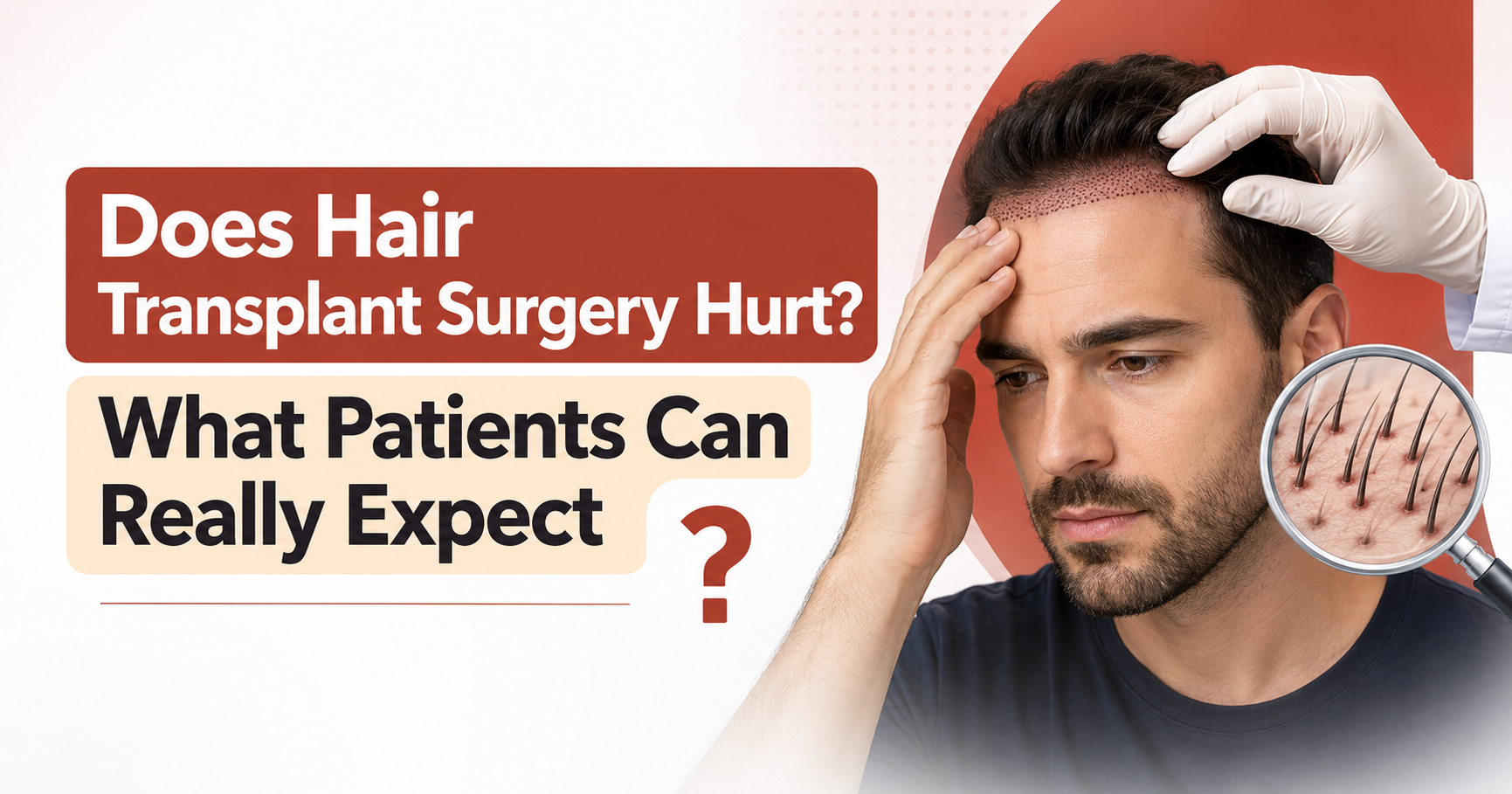
Many people considering a hair transplant ask the same question before booking a consultation:
“Will it hurt?”
It’s a perfectly natural concern. After all, the thought of undergoing any surgical procedure can feel intimidating, especially when it involves your scalp.
The good news is that modern hair transplant surgery is far less painful than most people imagine. Thanks to advanced techniques, local anaesthesia, and minimally invasive procedures, most patients describe the experience as surprisingly comfortable. While you may experience mild discomfort during certain stages and some soreness afterwards, severe pain is uncommon.
In this guide, we’ll walk you through exactly what happens before, during, and after a hair transplant, explain where you might experience discomfort, and share practical tips to help make your recovery as smooth as possible.
Whether you’re considering a hair transplant for the first time or simply researching your options, understanding what to expect can help you approach the procedure with confidence.
Understanding Modern Hair Transplant Surgery
Hair transplantation has evolved tremendously over the past decade. Modern procedures focus not only on delivering natural-looking results but also on making the experience as comfortable as possible.
The two most common techniques include:
Follicular Unit Extraction (FUE)
In an FUE hair transplant, individual hair follicles are carefully extracted from the donor area, usually the back or sides of the scalp, and implanted into areas experiencing hair loss.
Because there are no large incisions or stitches involved, recovery is generally quicker, and post-operative discomfort is minimal.
Follicular Unit Transplantation (FUT)
FUT involves removing a thin strip of scalp from the donor area, from which healthy follicles are separated and transplanted.
While FUT may involve slightly more discomfort during recovery due to the stitches, modern pain management techniques help keep patients comfortable throughout the healing process.
At experienced clinics, the surgical team prioritises patient comfort at every stage, from administering anaesthesia to post-operative care.
Does a Hair Transplant Hurt During the Procedure?
The short answer is:
For most patients, not really.
Before the procedure begins, the surgeon administers local anaesthesia to numb both the donor and recipient areas of the scalp. Once the anaesthesia takes effect, you should not feel pain during the surgery itself.
The Anaesthesia Injections
This is the part most patients notice the most.
The injections may cause:
- A brief pinching sensation
- Mild stinging for a few seconds
- Slight pressure
The discomfort usually lasts only a few moments.
Many patients later say the injections were the most uncomfortable part of the entire procedure.
During Follicle Extraction
Once your scalp is numb, the extraction of hair follicles is generally painless.
You may notice:
- Gentle pulling
- Light vibration
- Pressure
- Movement around your scalp
These sensations are completely normal and should not be painful.
During Implantation
Similarly, placing the follicles into the recipient area typically causes little to no pain.
Depending on the length of the procedure, patients often:
- Listen to music
- Watch movies
- Chat with the surgical team
- Take short breaks
Many are pleasantly surprised by how relaxed the experience feels.
What Does a Hair Transplant Feel Like Afterwards?
After the anaesthesia wears off, it is normal to experience some temporary discomfort.
Most patients report:
- Mild soreness
- Tightness in the scalp
- Tenderness in the donor area
- A feeling similar to mild sunburn
These symptoms are generally manageable and improve over the next few days.
Pain is usually mild and can often be controlled with the medications prescribed by your surgeon.
How Long Does the Discomfort Last?
Everyone heals differently, but a typical recovery timeline looks like this:
Time | What You Can Expect |
Day 1 | Mild soreness, tightness, slight swelling |
Days 2-3 | Tenderness gradually improves |
Days 4-7 | Most discomfort has settled |
Week 2 | Scalp feels significantly better |
One Month | Most patients feel completely back to normal |
Tiny scabs around the transplanted follicles are also expected and naturally fall off during the healing process.
Factors That Influence Pain Levels
Not everyone experiences recovery in exactly the same way.
Several factors can affect how much discomfort you feel.
Your Pain Tolerance
Everyone has a different threshold for pain. While one patient may describe the experience as virtually painless, another may notice more soreness during recovery.
Fortunately, most patients rate the discomfort as mild.
The Technique Used
Minimally invasive techniques such as FUE generally result in less discomfort and a faster recovery than traditional methods.
The absence of stitches also contributes to greater comfort during healing.
Number of Grafts
Larger procedures involving 3,000 to 4,000 grafts may lead to more temporary tenderness simply because a larger area has been treated.
However, this doesn’t necessarily mean significantly more pain.
Following Aftercare Instructions
One of the biggest factors affecting recovery is how carefully patients follow their surgeon’s instructions.
Avoiding unnecessary touching, protecting the scalp, taking prescribed medication, and attending follow-up appointments all contribute to a smoother healing experience.
Tips to Make Your Hair Transplant Recovery More Comfortable
While some discomfort after a hair transplant is normal, there are several simple steps you can take to make the recovery process easier and promote faster healing.
Follow Your Medication Schedule
Your surgeon may prescribe pain-relieving medication, antibiotics, or anti-inflammatory medicines. Take these exactly as directed, even if you feel comfortable, as they help prevent unnecessary discomfort and reduce the risk of complications.
Sleep with Your Head Elevated
For the first few nights after surgery, sleep with your head elevated at approximately a 30 to 45-degree angle. This helps minimise swelling around the forehead and transplanted area.
Many patients find using two pillows or a travel neck pillow makes sleeping more comfortable during the first few nights.
Avoid Touching the Transplanted Area
The newly implanted grafts are delicate during the initial healing phase. Avoid scratching, rubbing, or picking at the scalp, even if it feels itchy.
Itching is a normal part of healing and usually settles within a few days.
Avoid Heavy Exercise
Intense workouts, running, weightlifting, swimming, and sports should generally be avoided during the first week or as advised by your surgeon. Excessive sweating can interfere with healing and increase the risk of irritation.
Follow Your Hair Washing Instructions
Most clinics provide detailed washing instructions after surgery. Using the recommended shampoo and washing technique helps keep the scalp clean while protecting the newly
Thinking about restoring your hair?
A hair transplant is more comfortable than many people imagine, especially when performed by an experienced surgeon using modern techniques.
At LR Aesthetics, Dr. Lalit Rajpal provides personalised consultations, advanced hair restoration procedures, and comprehensive aftercare to help patients achieve natural-looking, long-lasting results.
Book your consultation today to understand your treatment options and receive a customised hair restoration plan tailored to your needs.
About Author

Dr. Lalit Rajpal
Dr. Lalit Rajpal, MBBS, MS, MCh (Plastic Surgery), is a board-certified plastic, aesthetic, and hair transplant surgeon based in Mumbai with over 12 years of experience. Known for his precise and patient-centered approach, he combines advanced surgical techniques with an artistic touch to deliver natural and precise results. Dr. Lalit is a member of leading national and international plastic surgery associations and is committed to providing personalized, ethical, and high-quality care to every patient.
Latest Post
- Understanding The Difference Between Gynecomastia And Chest Fat
- Rhinoplasty Cost In India: A Complete Breakdown
- Hair Transplant Cost in India: Find Out What You’ll Really Pay!
- Hair Transplant Side Effects
- How to Reduce Breast Size Naturally and With Surgery
- Is Hair Transplant Safe? Complete Safety Guide
- Right Age for Hair Transplant: Minimum Requirement, Risks & Benefits

Dr. Lalit Rajpal is a leading Plastic, Cosmetic, and Hair Transplant Surgeon based in Mumbai. With over 10+ years of experience, he has successfully performed 300+ cosmetic surgeries and 420+ reconstructive surgeries.



Treatments
©2026 All Rights Reserved Dr. Lalit Rajpal Aesthetic Clinic Managed by Vbind