


Dr. Lalit Rajpal
Confidence Beauty Redefined
Transforming lives through artistry, expertise, and care with global standards of excellence.

Difference Between Hair Fall and Hair Loss: Causes, Signs, and Solutions
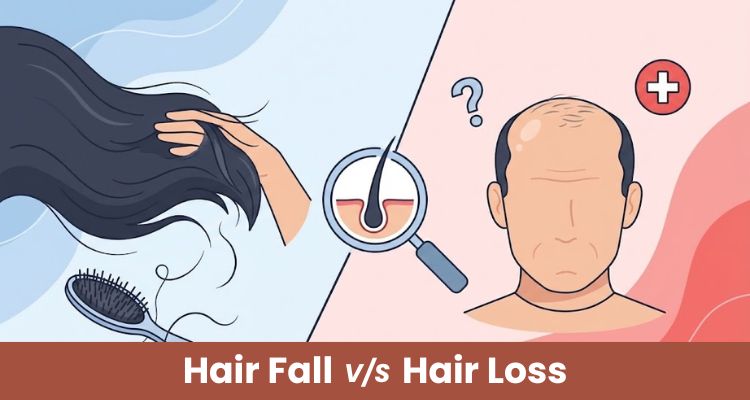
Finding hair on your pillow or bathroom floor is a scary experience. Most people generally assume hair fall and hair loss are the same thing. However, they are not. One could be a temporary condition, and the other might indicate a serious condition.
Using different products without understanding the actual cause may lead to improper results. Knowing the actual difference between hair fall and hair loss is crucial for choosing the correct solution for your scalp and hair.
This blog discusses the difference between hair fall and hair loss and how they are usually treated.
Understanding Hair Fall
Hair fall is a common condition that almost everyone experiences. Losing a small amount of hair each day is completely natural. In fact, it is part of the hair life cycle. And new hairs usually grow in to replace the ones that fall, thus maintaining your hair’s overall volume.
The normal amount for daily shedding remains between 50 and 100 strands. This happens through the cycles of hair development which have three phases
- Anagen Phase (Growing): The hair grows actively from the scalp
- Catagen Phase (Transitional): In this phase, hair growth stops and prepares to shed
- Telogen Phase (Resting): The hair rests before falling out
Different hair follicles are at different stages of hair growth at the same time. That is why you may see some hairs falling out while others are still growing. This is the main reason why the scalp is always producing new hair while not experiencing any thinning of hair. Having a clear understanding of hair loss clearly before starting to think of other important issues, such as Is hair transplant safe?
Causes of Hair Fall
Hair fall often happens due to daily habits, body changes or short-term conditions. Common causes include
- Age: Hair development slows down after some years. Hair gets thinner and weaker. This causes it to fall.
- Seasonal Changes: People experience more hair loss in some seasons. For example, more hair loss is seen in autumn. The reasons include changes in the weather and moisture on one’s scalp.
- Stress: Sometimes stress can cause more follicles to advance to the telogen phase simultaneously. This results in an apparent thinning of the hair.
- Diet and Nutrition: Lack of proteins, vitamins and minerals decreases the strength of the hair roots. Severe dieting interferes with the hair cycle.
- Hair Care: Engaging in hair care practices such as frequent exposure of hair to heat, chemicals and braiding at times causes hair breakage and loss.
Signs of Normal Hair Fall
Hair fall often goes unnoticed because it happens gradually. Some signs of shedding include noticing a few hairs on your pillow, comb or brush, which is completely normal. Hair may be of the same thickness and the growth of new hair helps to replace the lost hair. The scalp remains not easily noticeable and bald areas are not found. Identifying these signs lets you know the hair fall and hair loss difference, so you know when shedding is normal and when it might be something more serious.
Understanding Hair Loss
Hair loss is different from daily hair fall. It refers to the slowing down of hair growth or the thinning of hair. It is a condition that cannot be reversed on its own. In many instances, the causes of hair loss are deeper which may require medical attention.
Hair loss happens when hair follicles stop developing new hair or get damaged and this often leads to thinning or bald patches. In contrast to normal shedding, a lot of hair doesn’t grow back at the same pace. If you visit a specialist for hair loss, you can discuss possible solutions and even the hair transplant costs in India and plan the right treatment to restore your hair.
Causes of Hair Loss
Hair loss can develop due to genetic, hormonal, medical or external reasons. The common causes are as follows.
- Genetics: Androgenetic alopecia also called male or female pattern baldness, is passed down in families and increases with age.
- Hormonal Changes: Thyroid disorders, menopause, pregnancy and hormonal imbalance affect hair growth.
- Medical Conditions: Alopecia areata, autoimmune diseases and scalp infections damage hair follicles.
- Drugs: Some medicines, such as antidepressants, blood thinners, chemotherapy drugs and drugs for blood pressure or cholesterol cause hair loss.
- Excessive Styling: Regular use of heat tools and strong chemicals weakens follicles and increases damage.
Signs of Hair Loss
Hair loss shows clear warning signs, as opposed to normal hair fall.
- Noticeable Thinning: Hair is noticeably thinning typically on top of the head.
- Bald Patches: Sudden round or irregular patches occur, usually associated with an underlying condition of alopecia areata.
- Considerably More Hair Loss: There is a great deal of hair in the shower drain, on clothes or on the pillow.
- Receding Hairline: A hairline recession is commonly seen in males, where the hairline tends to move back as they age.
When to Consult a Doctor for Hair Loss Treatment
Once you understand hair loss vs hair fall, you can look for suitable solutions, from lifestyle changes to medical treatments, with the guidance of experts.
For Hair Fall
- Sudden Increase: Excessive hair shedding should be analysed by a dermatologist or a trichologist.
- Long-Term Scalp Problems: Scratching, redness, scaling or irritation, together with hair loss, requires medical attention.
- Family History: Taking early advice can assist with the management of family histories.
For Hair Loss
- Rapid Thinning: Fast thinning or visible scalp areas need quick medical care.
- Sudden Hair Loss: Hair falling in clumps or patches should be checked right away.
Additional - Symptoms: Tiredness, weight change or skin changes, along with hair loss may show internal health issues.
Hair Loss Treatment
Medical care offers different treatment choices based on the cause.
- Medication
Finasteride (Propecia) and minoxidil (Rogaine) are often used for androgenetic alopecia to slow hair loss and support regrowth. - Topical Therapies
Corticosteroids and immunotherapy help control conditions such as alopecia areata. - Hair Transplantation
To restore hair density, patients often opt for a hair transplant in Mumbai, where follicles from thicker parts of the scalp are transplanted to areas with hair loss. - Laser Treatment
Low-level laser therapy uses red light or cold lasers to stimulate hair follicles and improve hair density. - Platelet-Rich Plasma Treatment
Plasma taken from the patient’s blood is injected into the scalp to activate hair follicles mainly in male pattern baldness. - Scalp Micropigmentation
A cosmetic method that places pigment dots on the scalp to give the look of fuller or closely shaved hair.
Hair Loss Prevention
Taking proper care protects your hair and keeps it healthy as much as possible.
- Feed Your Hair: You can grow the healthiest hair by including vitamins A, C, D, E, iron and biotin in your diet.
- Keep an Eye on Hairstyle: Avoid tight ponytails or braids that pull at the roots.
- Avoid Heat/Chemical Usage: Limited use of hair dryers, straighteners and chemical treatments. Gentle handling decreases breakage.
In addition to these, stress control hormones and hair cycles are balanced by relaxation techniques such as yoga and breathing exercises.
To Wrap Up
The difference between hair fall and hair loss is huge since causes, symptoms and treatments differ greatly. Normal hair shedding is part of the hair growth cycle. But chronic thinning or bald patches could hint at problems that may require medical intervention.
It helps in the right diagnosis for better outcomes and avoids misdiagnosed remedies. Any unusual change in hair growth warrants immediate expert advice as the problem will increase with time.
Professional checks and modern hair restoration care according to individual needs are provided by Dr. Lalit Rajpal, a reliable hair transplant and plastic surgeon in Mumbai. Book a consultation today and get proper guidance for clear answers and a treatment that supports hair health and confidence.
About Author

Dr. Lalit Rajpal
Dr. Lalit Rajpal, MBBS, MS, MCh (Plastic Surgery), is a board-certified plastic, aesthetic, and hair transplant surgeon based in Mumbai with over 12 years of experience. Known for his precise and patient-centered approach, he combines advanced surgical techniques with an artistic touch to deliver natural and precise results. Dr. Lalit is a member of leading national and international plastic surgery associations and is committed to providing personalized, ethical, and high-quality care to every patient.
Latest Post

Dr. Lalit Rajpal is a leading Plastic, Cosmetic, and Hair Transplant Surgeon based in Mumbai. With over 10+ years of experience, he has successfully performed 300+ cosmetic surgeries and 420+ reconstructive surgeries.



Treatments
©2026 All Rights Reserved Dr. Lalit Rajpal Aesthetic Clinic Managed by Vbind