


Dr. Lalit Rajpal
Confidence Beauty Redefined
Transforming lives through artistry, expertise, and care with global standards of excellence.

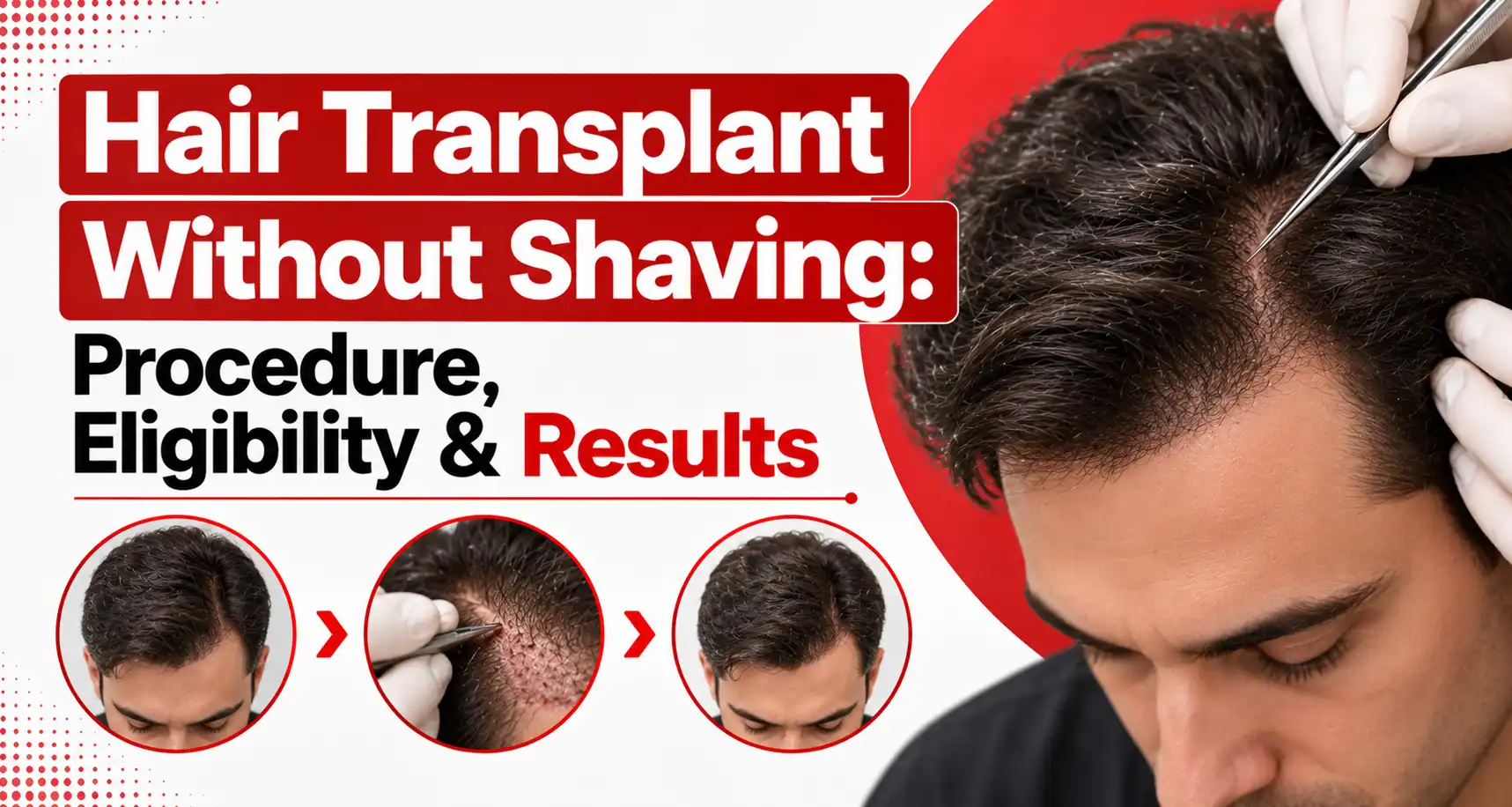
Hair Transplant Without Shaving: Procedure, Eligibility & Results
Key Highlights
- Yes, hair transplant without shaving is possible using FUE but selective trimming might be needed.
- A no shave hair transplant restores thinning or balding areas without shaving the entire scalp.
- The procedure uses FUE techniques to extract individual hair follicles while keeping much of the existing hair intact.
- Suitable candidates need adequate donor hair density, appropriate hair length and a manageable graft requirement.
- Selective trimming may still be necessary to access follicles and support accurate graft extraction.
- Visible hair growth typically begins after several months with results continuing to mature over 6–12 months.
- Consulting an experienced hair transplant surgeon helps determine suitability, expected results, recovery requirements and treatment costs.
Table of Contents
No-shave hair transplant is a process that helps rejuvenate the balding or thinning zones by not needing the patient’s scalp to be shaven. This type of surgery helps preserve the hair around the area and aids in concealing any incisions that have been made at the start of the recovery process.
However, the procedure needs a certain amount of density in the donor area as well as hair length and surgical accuracy. Consultation with a plastic surgeon in Mumbai would still be necessary prior to opting for such an option.
What Is a No-Shave Hair Transplant?
In the no-shave hair transplant technique, each follicular unit is excised, leaving much of the donor hair intact and long. Selective trimming of small patches is possible to cover excision sites during the healing process.
- Procedure: Individual follicular units are extracted from appropriate donor sites.
- Pre-planning: Pre-assessment of hair density, length, hair loss and graft requirements is done prior to surgery.
Those who desire a hair transplant without shaving head usually do not want a postoperative look. Trimming can still be required at selected follicle sites.
How Is a No-Shave Hair Transplant Possible?
Certain types of FUE tools help the doctors to get past the long hairs and extract the hair follicles. Accurate placement of the follicles and careful punching and handling makes sure that other follicles do not suffer any damage.
- Selective trimming: Specific hairs are trimmed sufficiently to reveal the follicles.
- Hair extraction: Minuscule punches extract the hairs along the follicle’s direction.
The term unshaven FUE hair transplant describes this approach, although trimming levels can differ between techniques and surgeons. Longer donor hair creates a demanding working field, making precision important.
What Happens During a No-Shave FUE Procedure?
The technique is similar to FUE but with greater accuracy since longer donor and recipient hairs are still here. Assessment, trimming, extraction, grafting, site preparation, and implantation are all done with great care.
- Assessment: The doctor evaluates the density of the donor area, nature of the hair, condition of the scalp, and pattern of thinning.
- Planning: The hairline and the graft placement are planned for the patient’s benefit.
- Selective trimming: Trimming is done only to the required extent on the selected donor area.
- Extraction: The hair follicles are extracted singly by means of small punches.
- Implantation: Small recipient sites are created between the naturally occurring hair follicles.
| Stage | Purpose | Visible change |
| Assessment | Evaluate areas | None |
| Trimming | Expose follicles | Small areas |
| Extraction | Remove grafts | Tiny points |
| Implantation | Place grafts | Mild redness |
| Healing | Sites settle | Hair camouflage |
Hair transplant patients opting for FUE hair transplant without shaving head must realize that how much they need to trim the hair depends on many factors, including the number of grafts, quality of hair and the procedure. Long hair helps in camouflaging, but makes the hair extraction process difficult.
Can You See Your Results Instantly?
While the grafts are immediately implanted, the end aesthetic results of the procedure will not be known on the day of the surgery. The existing hair will act to cover the areas initially, whereas the transplanted follicles will take several months for new hair growth.
- Early appearance: The existing hairs will help conceal many of the treatment areas.
- Temporary shedding: The newly grafted hairs may shed during their growth cycle.
- New growth: The transplanted hairs will typically start appearing after several months.
- Maturation: The density and texture will keep getting better with development of the follicles.
Patients must be careful about the hair transplant success rate claimed by hair transplantation clinics because each case is unique.
Is There Really Zero Downtime After Hair Transplant Recovery?
No-shave treatment can make surgery less noticeable, but it does not eliminate healing. Mild redness, tenderness, swelling, scabbing or temporary shedding may occur during the initial healing period after surgery.
Recovery stage | Typical experience | Visibility |
First days | Mild redness | Usually concealed |
First week | Small crusts | Often discreet |
Weeks 2-4 | Temporary shedding | Existing hair covers |
Months 3-6 | New growth | Gradual improvement |
Months 6-12 | Density develops | Increasingly natural |
The hair transplant recovery time will vary based on factors such as number of grafts, method, healing process, and post-surgery care. The patients will require instructions regarding washing, exercises, sun exposure, and scalp care.
No shave hair transplant is a procedure that aims at protecting hair around the transplanted hair, although there might be some redness or small crusts. The fact that it is hard to see means there are no recovery requirements.
Who Is an Ideal Candidate for No-Shave Hair Transplant?
The key highlights for determining the eligibility for a no-shave hair transplant include sufficient donor hair density, appropriate hair length, and a reasonable grafting requirements. A consultation would be required for those candidates that experience hair loss in an extensive way or those candidates that have only limited donor hair.
- Hair length: Longer hair will mask the points of hair removal and initial recipient site changes.
- Donor density: Adequate follicles should be available to remove.
- Discretion: This approach could be ideal for those who are professionals or worried about surgery being apparent.
- Hair-loss pattern: The chosen localized or diffuse pattern could be an appropriate case for this approach.
People wondering whether can hair transplant be done without shaving head will realise that the answer is yes, but not always. The surgeon needs to consider factors such as camouflage, donor safety, grafts, and feasibility.
Those considering an unshaven hair transplant will need to know that FUE might be suggested where there is extensive harvesting of grafts. Some trimming of the donor might still be needed.
The procedure can take more operating time because each individual follicle is carefully extracted from a field where there are already longer hairs. Planning is crucial, just as important as not having to shave beforehand.
Planning influences the hair transplant cost, as there are many factors that affect the cost of the hair transplant procedure. A consultation gives a useful estimate.
Wrapping It Up
The no shave method could ensure that hair restoration is discreet since the hair is not stripped off before implantation. This would work for individuals who prefer discretion, aesthetics, and non-intrusive techniques, but they will still need to go through the process of recovery and cannot promise density.
However, selection of candidates will continue to be important because there will be different factors such as the donor site, type of hair, degree of hair loss, grafts required, and procedure that will affect the result.
Dr. Lalit Rajpal has been in the field for 12 years and uses an approach that ensures patient’s success. Patients considering hair transplant in Mumbai can consult Dr. Lalit Rajpal to discuss suitability, technique, recovery, and treatment planning for their hair restoration goals.
About Author
Dr. Lalit Rajpal
Dr. Lalit Rajpal, MBBS, MS, MCh (Plastic Surgery), is a board-certified plastic, aesthetic, and hair transplant surgeon based in Mumbai with over 12 years of experience. Known for his precise and patient-centered approach, he combines advanced surgical techniques with an artistic touch to deliver natural and precise results. Dr. Lalit is a member of leading national and international plastic surgery associations and is committed to providing personalized, ethical, and high-quality care to every patient.
Latest Post
- Understanding The Difference Between Gynecomastia And Chest Fat
- Rhinoplasty Cost In India: A Complete Breakdown
- Hair Transplant Cost in India: Find Out What You’ll Really Pay!
- Hair Transplant Side Effects
- How to Reduce Breast Size Naturally and With Surgery
- Is Hair Transplant Safe? Complete Safety Guide
- Right Age for Hair Transplant: Minimum Requirement, Risks & Benefits

Dr. Lalit Rajpal is a leading Plastic, Cosmetic, and Hair Transplant Surgeon based in Mumbai. With over 10+ years of experience, he has successfully performed 300+ cosmetic surgeries and 420+ reconstructive surgeries.



Treatments
©2026 All Rights Reserved Dr. Lalit Rajpal Aesthetic Clinic Managed by Vbind