

Dr. Lalit Rajpal
Confidence Beauty Redefined
Transforming lives through artistry, expertise, and care with global standards of excellence.

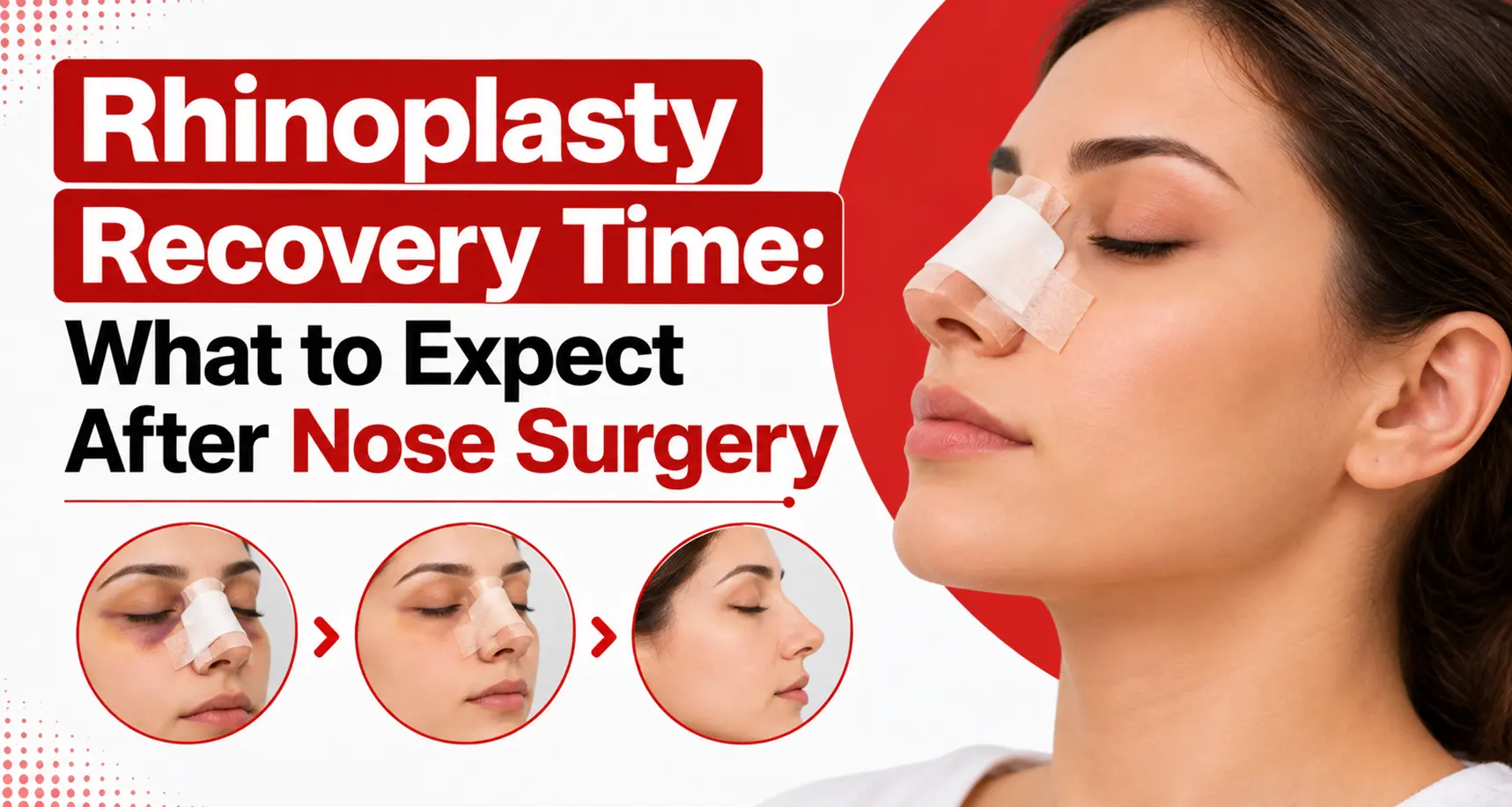
Rhinoplasty Recovery Time: What to Expect After Nose Surgery
Key Highlights
- The recovery period after rhinoplasty varies by surgery type.
Common early signs include swelling and moderate pain that eases over time. - Don’t exercise, put pressure on your nose or blow your nose until your doctor tells you it’s fine to follow regular activities.
- Full recovery may take several weeks to months.
- Choosing an experienced surgeon and following personalized aftercare guidance can support safer healing and help patients understand realistic recovery expectations.
- Book an appointment with a professional doctor for the best treatment and proper follow up care.
Table of Contents
- Rhinoplasty Recovery Time: What to Expect After Nose Surgery
- Rhinoplasty Surgery Recovery During the First Week
- Rhinoplasty Recovery - 2nd Week
- Rhinoplasty Recovery - 3 to 4 weeks
- Rhinoplasty Recovery - 1 to 3 months
- Rhinoplasty Recovery - 4 to 9 months
- Recovery Symptoms During the Healing Process
- Factors that Determine the Healing Period of Rhinoplasty Surgery
- Exercise and Other Physical Activities
- What About Pain After Rhinoplasty?
- How Much Does It Cost?
- Winding It Up
Rhinoplasty Recovery Time: What to Expect After Nose Surgery
Rhinoplasty is also known as a nose job. It is a plastic surgery procedure that helps to change the look of the nose and addresses problems that make breathing difficult. The surgery may involve repair of the septum or healing of any damaged nasal structure due to an accident.
The rhinoplasty recovery time can vary from one patient to another, considering the nature of the surgery and correction that was performed, as well as your own recovery process.
While you should expect swelling and bruising to decrease after a couple of weeks, your nose may continue to change over the coming months. Let us dive into the blog to learn what to expect from the rhinoplasty surgery.
Rhinoplasty Surgery Recovery During the First Week
The first week of nose job recovery is generally advised to rest. You can notice bruising and swelling in the first week. Here are the most common things you can expect,
- Avoid hard activity.
- Avoid touching your nose
- Take your meds as directed.
- Clean up the operation site.
- Go to the follow-up visit after the operation.
The nasal splint is usually removed at an early follow-up visit.
Rhinoplasty Recovery - 2nd Week
The second week brings visible progress.
- Most bruising after nose surgery fades significantly
- Swelling continues to decrease
- Patients can return to non-strenuous work
- Facial appearance looks more normal
Although improvement is noticeable, the nose remains sensitive and continues to heal internally.
Rhinoplasty Recovery - 3 to 4 weeks
This stage shows steady refinement.
- Swelling reduces further, especially around the bridge
- The nose begins to take on a more defined shape
- Light exercise may be resumed
At this point in the rhinoplasty results timeline, others may not notice you had surgery.
Rhinoplasty Recovery - 1 to 3 months
Healing becomes more subtle but continues steadily.
- Residual swelling remains, especially at the tip
- Nasal structure stabilizes
- Breathing improves fully
Patients often feel “back to normal,” but internal healing continues.
Rhinoplasty Recovery - 4 to 9 months
This is the final stage of rhinoplasty recovery.
- Swelling completely resolves
- The final nose shape becomes visible
- Skin adapts to the new structure
The tip of the nose, in particular, takes the longest to fully refine.
You can contact Dr. Lalit Rajpal for the best rhinoplasty in Mumbai. He offers the best treatment for his patients.
Post-Surgery Care
Proper compliance with rhinoplasty post op procedures is important for proper recovery. Your surgeon will give you guidelines on cleaning and other follow-ups.
You should never blow your nose unless you have been cleared to do so by your surgeon. Avoid blowing your nose in the first few days after surgery, as your surgeon may require you to sneeze through your mouth to avoid putting pressure on the surgical site.
Recovery Symptoms During the Healing Process
When the recovery process occurs after rhinoplasty surgery, the following symptoms could occur:
- Swelling: The most visible within the first 2 weeks
- Bruising: Around the eyes, disappears after 10-14 days
- Congestion: Caused by swelling inside the nose
- Pain or soreness: Temporary symptom
These symptoms are normal and will gradually disappear with time.
Factors that Determine the Healing Period of Rhinoplasty Surgery
There are various factors that determine the rhinoplasty surgery recovery:
- Thicker skin takes more time to heal completely
- The type of treatment, such as open or closed rhinoplasty
- Health of the patient
Compliance with aftercare instructions
Exercise and Other Physical Activities
Exercises are generally not allowed during the early stages of recovery. Exercises that can elevate blood pressure levels can aggravate swelling or bleeding during the early healing process.
You may start walking gradually, based on your surgeon’s advice. Running, lifting weights, playing contact sports and other physical activities need to wait for a longer time.
Do not start strenuous exercise just because you start feeling better. Healing may still be happening inside even if there are no external symptoms.
What About Pain After Rhinoplasty?
Discomfort after surgery is an important concern for many people, so the question arises like is rhinoplasty painful? The answer is no. It is done under anesthesia to avoid substantial pain during surgery. Patients may feel pressure, congestion, sensitivity, or discomfort after surgery. Pain varies from person to person and from procedure to procedure.
Pain levels may vary depending on your individual needs. If you have severe or worsening pain, tell your doctor.
How Much Does It Cost?
Rhinoplasty costs in India can vary widely based on several factors, such as the surgeon’s expertise, the type and complexity of the operation, hospital facilities, anesthesia costs, and aftercare. The cost of rhinoplasty may differ from functional rhinoplasty, which is done primarily for functional purposes.
Additional costs for corrective or revision surgeries can also increase the overall cost. The best way to know the total cost is to discuss it during the consultation and determine which costs are included in the quote.
Winding It Up
Choosing the right doctor can play a significant role in rhinoplasty, from understanding the procedure to getting tailored advice on recovery. Dr. Lalit Rajpal specializes in individualized rhinoplasty treatment plan which would allow the patient to understand what is being offered, what to expect and what the recovery process looks like before any work is done.
If you’re considering a nose job, a proper consultation will help you make the right decision based on your facial features and goals. Contact Dr. Lalit Rajpal a highly skilled plastic surgeon in Mumbai, for further information.
About Author
Dr. Lalit Rajpal
Dr. Lalit Rajpal, MBBS, MS, MCh (Plastic Surgery), is a board-certified plastic, aesthetic, and hair transplant surgeon based in Mumbai with over 12 years of experience. Known for his precise and patient-centered approach, he combines advanced surgical techniques with an artistic touch to deliver natural and precise results. Dr. Lalit is a member of leading national and international plastic surgery associations and is committed to providing personalized, ethical, and high-quality care to every patient.
Latest Post
- Understanding The Difference Between Gynecomastia And Chest Fat
- Rhinoplasty Cost In India: A Complete Breakdown
- Hair Transplant Cost in India: Find Out What You’ll Really Pay!
- Hair Transplant Side Effects
- How to Reduce Breast Size Naturally and With Surgery
- Is Hair Transplant Safe? Complete Safety Guide
- Right Age for Hair Transplant: Minimum Requirement, Risks & Benefits

Dr. Lalit Rajpal is a leading Plastic, Cosmetic, and Hair Transplant Surgeon based in Mumbai. With over 10+ years of experience, he has successfully performed 300+ cosmetic surgeries and 420+ reconstructive surgeries.



Treatments
©2026 All Rights Reserved Dr. Lalit Rajpal Aesthetic Clinic Managed by Vbind