


Dr. Lalit Rajpal
Confidence Beauty Redefined
Transforming lives through artistry, expertise, and care with global standards of excellence.

Can I Wear Cap After Hair Transplant
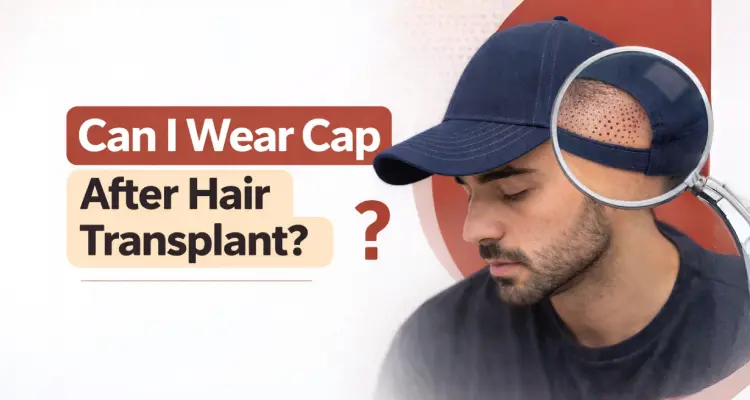
Table of Contents
- Is It Okay to Use a Cap After a Hair Transplant?
- Why Wearing a Cap Too Soon Can Be Risky?
- How Long After a Hair Transplant Can You Wear a Cap?
- Is Wearing a Cap Bad for Your Hair After a Transplant?
- Factors Affecting When You Can Wear a Cap
- Tips to Prevent Problems When Wearing a Cap Following a Hair Transplant
- Protecting Your Scalp from the Sun
- Conclusion
A fresh hair transplant is done, and the first thought that crosses many minds is simple: Can I wear cap after hair transplant? The desire to cover up the scalp is completely understandable. The tiny scabs, redness, and a healing scalp are enough reasons for anyone to want to put on a cap to feel comfortable going out in public.
Still, that simple step isn’t always safe right away. The grafts require time to settle. Even if it is minor pressure on the scalp, it may influence the healing stage. But is it really advisable to wear caps after hair transplantation, or should you wait?
Well, the answer to the question depends on the timing and the kind of cap. Let’s discuss the matter further.
Is It Okay to Use a Cap After a Hair Transplant?
Yes, it is okay to wear a cap after a hair transplant in Mumbai. The time is important. Hair grafts require time to settle, and one can wear a cap after the hair grafts begin to settle. The time it takes to heal may vary from one person to another, depending on the procedure and the rate at which the body is able to heal.
Examples:
- After FUE (Follicular Unit Extraction): A soft and light cap can be worn after 7 days once the hair grafts begin to settle
- After FUT (Follicular Unit Transplantation): The recovery process takes a little longer. So, it is a good idea to wear a cap after 14 days
Every individual’s healing process is different. Anyone wondering can I wear cap after hair transplant should always follow the advice given by the doctor, since the right timing can vary depending on the procedure and recovery stage.
Why Wearing a Cap Too Soon Can Be Risky?
The grafts that are placed in the scalp are still very delicate during the first few days after a hair transplant. FUE as well as FUT procedures involve placing hair follicles into tiny holes created in the scalp. The hair follicles require time to settle firmly into their positions.
A cap that presses on the scalp may move the follicles or irritate the treated skin. The scalp also needs proper airflow to heal well.
Possible risks of wearing a cap too early include:
- Removal of Grafts: New hair follicles may shift before they settle correctly
- Irritation or Infections: Friction and perspiration may cause irritation of the skin
- Less Airflow: Reduced airflow may cause delayed healing
- Irregular Hair Growth: Disrupted hair grafts may cause irregular hair growth
How Long After a Hair Transplant Can You Wear a Cap?
While many patients ask “Is hair transplant safe?” during the recovery stage, doctors usually explain that proper aftercare plays an important role in safe healing and successful results. One common concern is wearing a cap after the procedure. Patients are generally advised to wait a few days before covering their scalp, as tight caps or anything that puts pressure on the treated area should be avoided in the early stage of recovery.
A general guide may look like this:
- After 3-5 Days: A very loose and soft cap, such as a bucket cap, may be worn carefully if the doctor recommends it
- After 10-14 Days: Normal fitted caps can usually be worn safely
- After 3-4 Weeks: Tight caps, helmets, or winter caps can be used without much risk
Healing speed is different for each person. A doctor can give the best advice after checking the scalp.
Is Wearing a Cap Bad for Your Hair After a Transplant?
Wearing a cap is not harmful after a hair transplant once the scalp has healed properly. Many patients ask when can I wear a cap after hair transplant, and doctors usually advise waiting a few days to a week before covering the scalp. After the healing stage, wearing a cap does not affect hair growth or reduce hair density in the long term.
Factors Affecting When You Can Wear a Cap
Several factors can affect the right time to start wearing a cap after a hair transplant.
Method of Hair Transplant (FUT vs. FUE)
- Follicular Unit Transplant (FUT): In this method, a portion of hair is taken from the donor site. Needles are used in this procedure. The healing process is longer for this method. Caps are not recommended to be worn on this area until after a longer time has passed.
- Follicular Unit Extraction (FUE): In this method, individual hair follicles are extracted from the scalp. This is a less painful procedure with a quicker recovery. However, hair grafts take some time to settle and form small scabs before a cap is worn
Healing Stage of the Scalp
The first few days after a transplant are the most sensitive. Hair grafts slowly attach to the scalp while the skin heals around them. Many people pass the most delicate stage in about 5-7 days. During this time, many patients ask, can I wear a cap after hair transplant, but it is important to be cautious and avoid putting pressure on the grafts. Since healing speed can vary for each person, following the surgeon’s advice is always the best approach.
Type of Cap
The kind of cap used also matters. Soft and loose caps are safer during recovery. Cotton caps allow better airflow and help reduce sweating. Tight caps that press the scalp should be avoided in the beginning.
Exercise Needs & Living Environment & Lifestyle
Daily activities and surroundings also affect cap use. People who work outdoors or in dusty places may need protection for their scalp. Caps can help block dust and dirt. Excess sweating under the cap should still be avoided to prevent irritation. Treatment timing also plays an important role, and the best age for hair transplant is usually when hair loss has become stable and the pattern is clearly visible.
Tips to Prevent Problems When Wearing a Cap Following a Hair Transplant
- Wear the Correct Cap: Choose a light and loose cap. A relaxed baseball cap or bucket cap may work well. Avoid tight caps with rough inner fabric.
- Do Not Touch Your Hair: Place the cap gently on the head. Avoid rubbing or pressing the graft area while putting on or removing the cap
- Hygiene is Essential: Always wear a clean cap. A dirty cap could harbour bacteria that can cause infections once it comes into contact with your healing scalp
- Watch for Discomfort: Painful or sensitive areas after a cap is worn should be checked by a doctor
Protecting Your Scalp from the Sun
The scalp can become irritated from the sun after a transplant. This is because the skin is sensitive for a few weeks after the transplant.
Direct exposure to the sun may cause irritation, redness, and colour changes. It is always advised by doctors that people avoid direct exposure to the sun for a period of two to three weeks.
A light cap may be used to avoid exposure to the sun and heat after the doctor has cleared it for use. Along with external care, internal care is equally important during recovery. Proper nutrition also plays a vital role in the healing process, and the best foods for hair growth must be incorporated into the diet.
Conclusion
A hair transplant procedure will definitely boost your confidence and yield great outcomes if the necessary care is taken during the post-surgical period. Wearing a cap after the procedure is generally safe, but many patients still wonder when can I wear cap after hair transplant. The first and foremost important aspect is timing.
Seeking professional advice can make the recovery process a lot easier. Undergoing a procedure and getting advice from a professional like Dr. Lalit Rajpal, a reliable plastic surgeon in Mumbai, helps patients know when to wear a cap during the recovery period. The advice also helps patients know how to take care of their scalps during the recovery period.
Anyone planning a hair transplant or looking for reliable aftercare support can consult Dr. Lalit Rajpal for expert guidance and personalised care.
About Author

Dr. Lalit Rajpal
Dr. Lalit Rajpal, MBBS, MS, MCh (Plastic Surgery), is a board-certified plastic, aesthetic, and hair transplant surgeon based in Mumbai with over 12 years of experience. Known for his precise and patient-centered approach, he combines advanced surgical techniques with an artistic touch to deliver natural and precise results. Dr. Lalit is a member of leading national and international plastic surgery associations and is committed to providing personalized, ethical, and high-quality care to every patient.
Latest Post
- Understanding The Difference Between Gynecomastia And Chest Fat
- Rhinoplasty Cost In India: A Complete Breakdown
- Hair Transplant Cost in India: Find Out What You’ll Really Pay!
- Hair Transplant Side Effects
- How to Reduce Breast Size Naturally and With Surgery
- Is Hair Transplant Safe? Complete Safety Guide
- Right Age for Hair Transplant: Minimum Requirement, Risks & Benefits

Dr. Lalit Rajpal is a leading Plastic, Cosmetic, and Hair Transplant Surgeon based in Mumbai. With over 10+ years of experience, he has successfully performed 300+ cosmetic surgeries and 420+ reconstructive surgeries.



Treatments
©2026 All Rights Reserved Dr. Lalit Rajpal Aesthetic Clinic Managed by Vbind