


Dr. Lalit Rajpal
Confidence Beauty Redefined
Transforming lives through artistry, expertise, and care with global standards of excellence.

Is Hair Transplant Safe? Complete Safety Guide
Table of Contents
- What are the Factors that Influence Breast Size?
- Surgical Options for Breast Reduction
- Traditional Breast Reduction Surgery
- Benefits of Traditional Breast Reduction Surgery
- Liposuction for Breast Reduction
- Benefits of Liposuction for Breast Reduction
- Reduction Combined with Mastopexy
- Benefits of Breast Lift with Reduction
- Non-Surgical Options for Breast Reduction
- Choosing Between Surgical and Non-Surgical Options
- Conclusion
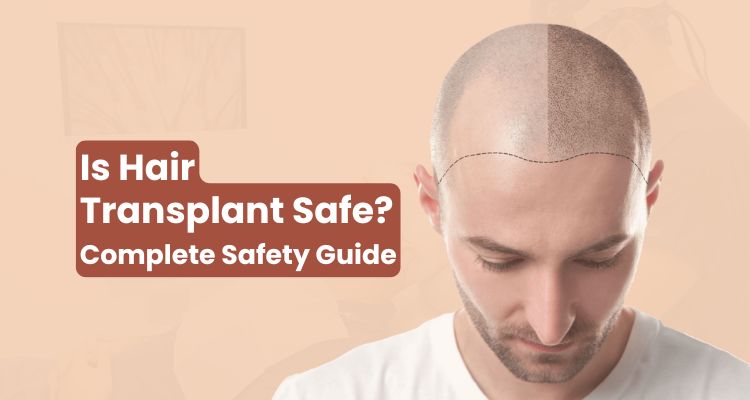
Noticing hair thinning or hair loss can be worrying and emotionally draining for many people. When hair loss continues despite home care or medical treatments, people start looking for more effective solutions. To tackle this problem, hair transplants are commonly recommended as a long-term solution.
Hair transplants are considered a long-term and often permanent solution. However, it is essential to ask a relevant question: Is hair transplant safe? Mixed opinions and cosmetic surgery concerns can make the decision feel uncertain.
Interest grows, but hesitation remains. Clear facts and the right guidance make all the difference before moving ahead with any medical procedure. This blog takes a closer look at the safety of hair transplants, the realities behind the procedure and the points many people overlook before treatment. The answer may shape how you view hair restoration and the choices you make next.
What Is a Hair Transplant?
Before you determine if a hair transplant is safe or not, you have to learn about this process. Hair transplantation can be defined as a medical procedure wherein healthy follicles of hair are moved from areas on your scalp that experience little hair loss to areas that have thinning hair or areas with baldness. In most cases, the healthy follicles will have been taken from the part on the back and sides of your head since this particular part experiences minimal hair loss.
Once transplanted, the follicles continue to grow in their new location, offering a natural-looking and long-term solution for hair loss. The procedure is commonly chosen by people dealing with pattern baldness and is performed under controlled clinical conditions.
There are two common techniques that are used.
- FUT or Follicular Unit Transplantation: Here, a thin strip of the scalp is extracted from the donor area and broken down into separate units. This procedure enables more units to be transplanted at once but leaves a fine, horizontal line.
- FUE or Follicular Unit Extraction: In this procedure, individual hair follicles are extracted one by one with the aid of an instrument. The resulting scars are tiny and dot-like, and the healing time is usually faster compared to FUT.
Is Hair Transplant Safe?
Yes. Hair transplant surgery has been established as a safe and reliable hair restoration treatment, especially when conducted by an experienced hair transplant surgeon in an authorised health facility. The surgery entails minimally invasive techniques conducted under local anaesthesia.
In most cases, the individual leaves the hospital on the same day and goes back to their normal activities within a short time frame. This is always reassuring to patients questioning how safe is hair transplant as a medical practice. Complications are rare, and even when side effects occur, they are temporary and painless, such as redness and swelling at the transplant area.
Many medical innovations in the field of hair transplantation tools and practices mean that it remains one the most predictable cosmetic surgery today.
Factors That Influence Hair Transplant Safety
Hair transplant safety is linked to several interrelated factors along with clarity regarding hair transplant cost in India. Awareness of these aspects reduces the risks and promotes overall outcomes.
Surgeon’s Experience
An experienced surgeon understands graft handling, hairline design, and depth control, hence reducing the chances of poor growth or complications.
Clinic Standards and Cleanliness
Medical protocols, sterile practices, and safety precautions protect patients from infections because the clinics are accredited.
General Health Status
Chronic conditions like diabetes, heart problems, or immune disorders can affect healing and, therefore, must be assessed beforehand.
Pre-Surgical Assessment
A very detailed scalp check, review of one’s history, and the blood tests that are needed confirm the appropriateness for the surgery.
Medication History
Certain medications and supplements increase the risk of bleeding or slow recovery, which are indicated here and should be reviewed prior to surgery.
Lifestyle Habits
Smoking, intake of alcohol, poor diet, and lack of rest interfere with the healing and graft survival.
Aftercare
Ignoring aftercare advice can increase infection risk or cause graft loss.
Existing Scalp Conditions
Skin disorders or any active scalp infection may influence graft retention and safety in general.
Is Hair Transplant Safe for Everyone?
Yes. Hair transplants are considered to be quite safe for most individuals, though this remains subject to personal factors. Factors such as age, the pattern and extent of hair loss, overall health, and individual expectations all play an important role in determining whether the procedure is suitable.
A medical evaluation helps determine is it safe to get hair transplant in your specific case and which technique would deliver the best results. A personal consultation with a professional helps in the early identification of risks and confirms a person’s suitability for the procedure. Personalised evaluation remains essential before proceeding.
Is Hair Transplant Safe Across Different Age Groups?
Yes. But safety and outcome depend on age. The hair loss pattern has a tendency to get worse with time, so timing is important.
- Under 25: The hair loss can be very unstable, which can result in unnatural looks later
- 25-35 Years: Hair loss distribution patterns become more stable, and thus, this range works well for most people
- 35-50 Years: In these age groups, the correct donor hair and achievable outcomes are likely to combine to produce very satisfactory hair transplants
- Above 50 Years: Stable health and realistic expectations promote safe procedures
- Teenagers: Surgical procedures are not common except when hair loss occurs due to some injury or scarring
Is Hair Transplant Safe for Women?
Yes. Hair transplant in Mumbai can be safe for women, though careful assessment is required. Female hair loss often appears as overall thinning rather than defined bald areas.
- Appropriate Cases: It is appropriate for cases of localised thinning, traction alopecia, or scarring-related hair loss
- Diffuse Hair Loss: Varies depending on the lack of density on donor sites
- Hormonal Issues: Thyroid conditions, PCOS, etc., need to be addressed before surgery
Is Hair Transplant Safe for Men?
Yes. Hair transplants are common in men and are also highly successful, answering the common concern about is hair transplant safe and permanent. Predictable donor areas allow accurate planning and long-term results when done by experienced surgeons.
- High Success Rates: This is owing to stable hair loss
- Ideal Candidate: Men with obvious balding but healthy donor sites
- Durable Results: This helps ensure proper long lasting hair growth
Is Hair Transplant Safe for Heart Patients?
Patients with heart problems can undergo hair transplants when given clearance by their physician.
- Cardiology Approval: A cardiologist’s evaluation verifies the safety
- Anaesthesia Issues: The employment of local anaesthesia should be compatible with heart medications
- Management: Blood thinners may need a dose change
Is Hair Transplant Safe for Diabetic Patients?
A diabetic patient can safely undergo hair transplant surgery as long as the sugar level is being properly regulated.
- Diabetes Managed: HbA1c and fasting glucose levels within normal range. This promotes the healing process
- Uncontrolled Diabetes: This can sometimes increase the chances of infection and the time to recovery
- Personalised Approach: Surgeons have to work out ways and aftercare plans in tune with the patient’s health
Conclusion
The safety of a hair transplant is essentially about proper guidance, medical skills, and realistic expectations. Scientific evolution and refined techniques have made this procedure reliable for the right candidates. Careful assessment, correct planning and responsible aftercare help minimise adverse risks and enhance the quality of outcomes.
Still questioning, is hair transplant surgery safe? Visit Dr. Lalit Rajpal Clinic for a detailed consultation and trusted hair transplant solutions using FUE and FUT methods.
Schedule your appointment with Dr. Lalit Rajpal, a trustworthy hair transplant & plastic surgeon in Mumbai. Take the initial step towards successful hair transplantation with confidence.
About Author

Dr. Lalit Rajpal
Dr. Lalit Rajpal, MBBS, MS, MCh (Plastic Surgery), is a board-certified plastic, aesthetic, and hair transplant surgeon based in Mumbai with over 12 years of experience. Known for his precise and patient-centered approach, he combines advanced surgical techniques with an artistic touch to deliver natural and precise results. Dr. Lalit is a member of leading national and international plastic surgery associations and is committed to providing personalized, ethical, and high-quality care to every patient.
Latest Post

Dr. Lalit Rajpal is a leading Plastic, Cosmetic, and Hair Transplant Surgeon based in Mumbai. With over 10+ years of experience, he has successfully performed 300+ cosmetic surgeries and 420+ reconstructive surgeries.



Treatments
©2026 All Rights Reserved Dr. Lalit Rajpal Aesthetic Clinic Managed by Vbind